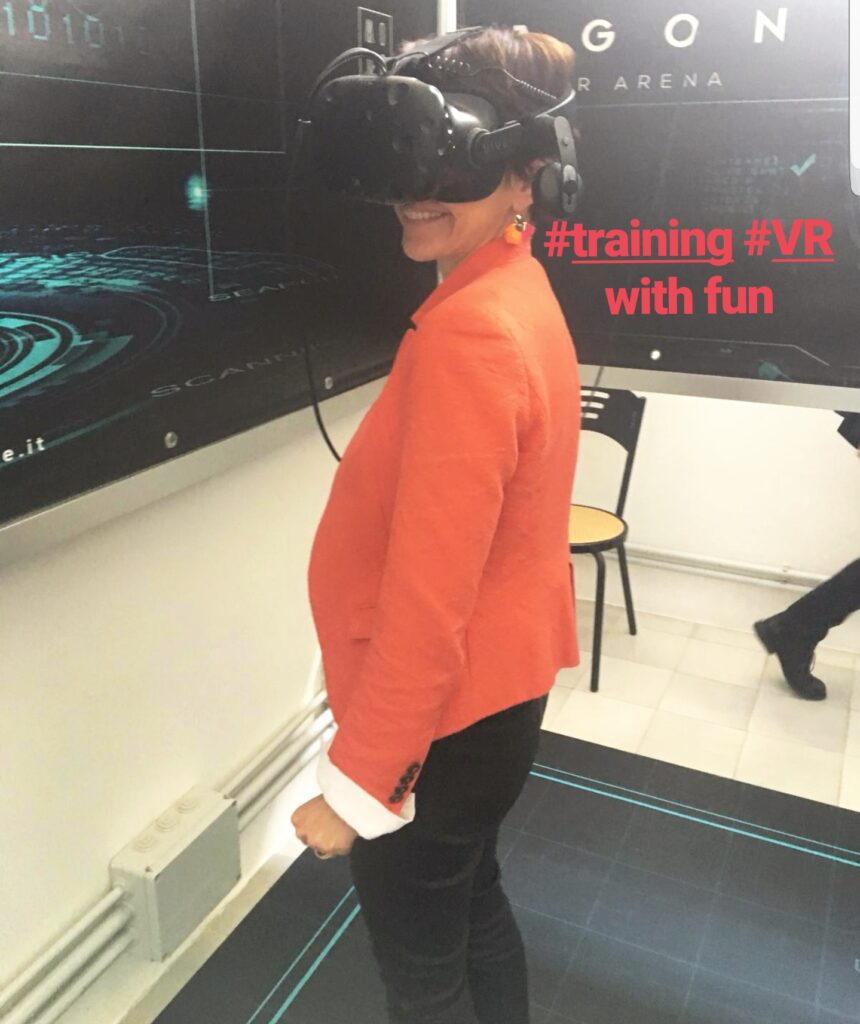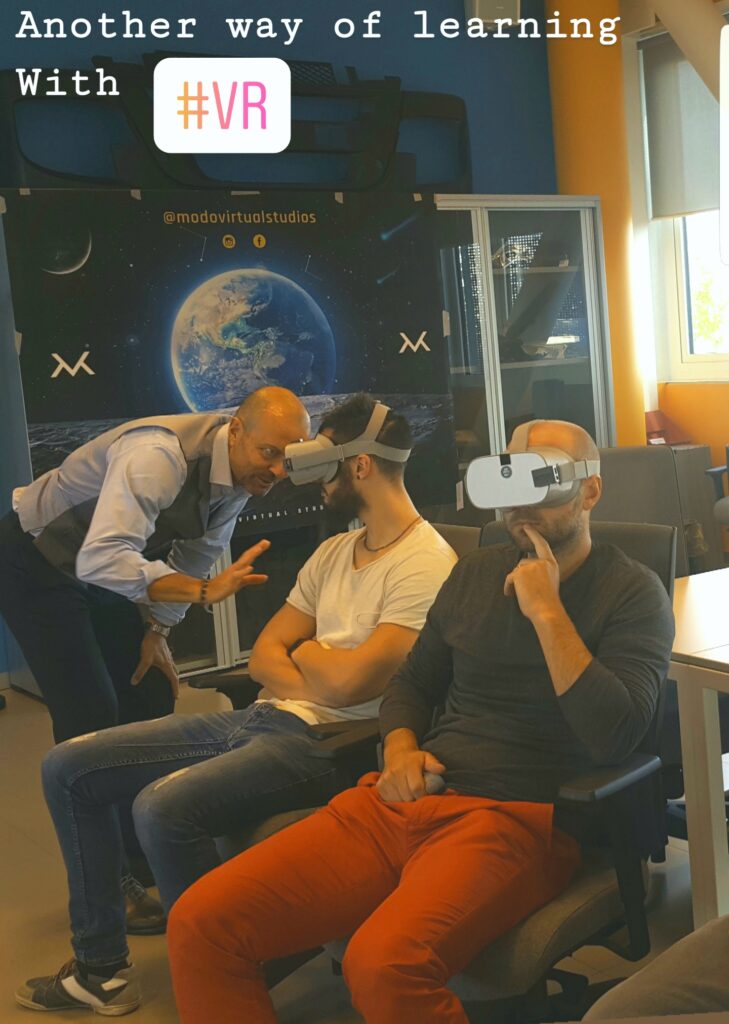
AR/VR Training prepares people to face situations that may generate pressure, discomfort or mistakes by allowing them to experience those situations first in a virtual environment through immersive technologies.
Presenting a project to a large audience, conducting a difficult feedback conversation, responding to an emergency or applying a critical procedure correctly are all situations in which we would prefer to feel prepared before they happen.
Virtual Reality, Augmented Reality and Mixed Reality make it possible to experience these situations in realistic and immersive environments before they occur in real life. Participants can practise, make mistakes, observe their reactions and develop greater confidence within a safe environment designed for learning through experience.


What Is AR/VR Training?
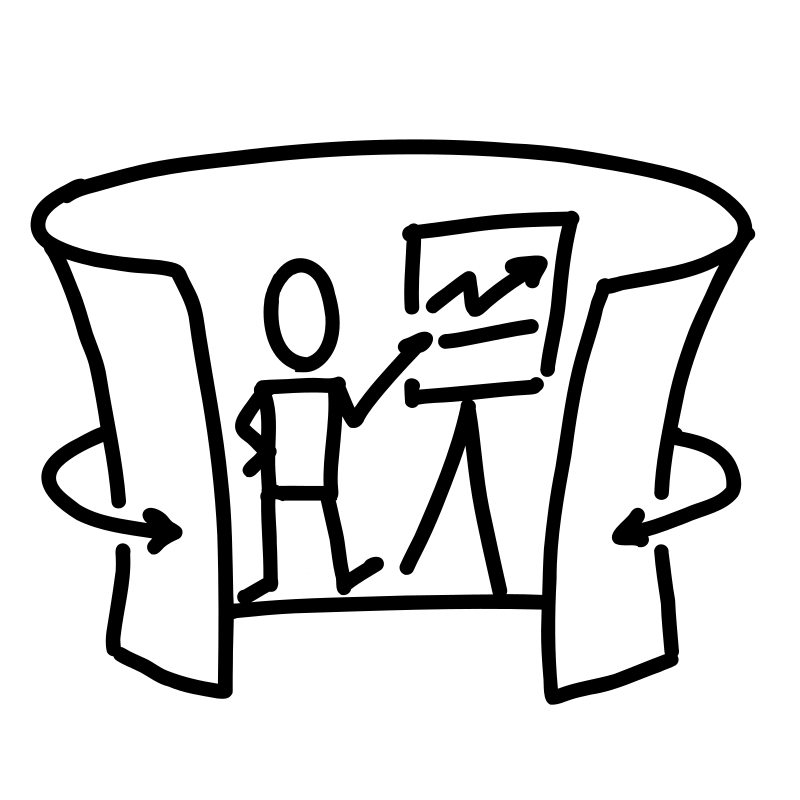
AR/VR Training combines immersive technologies with learning design to create engaging and interactive development experiences modelled on real workplace situations.
Technology is used to rehearse effective behaviours, strengthen procedural and episodic memory and transform learning from a theoretical exercise into direct experience.
Depending on the context, the programme may use Virtual Reality, Augmented Reality or a combination of technologies integrated through gamification, all designed around learning objectives, target competencies and the experience participants are expected to encounter.
When Is Virtual Reality Training Useful?

Public Speaking
You know exactly what you want to say, yet when dozens of people are watching, attention often shifts from the content to the judgement of the audience.
Your voice changes, your pace accelerates and a significant amount of energy is spent managing anxiety.
Practising in an immersive environment helps people feel more prepared when the audience becomes real.
Feedback and Leadership
You need to have a difficult conversation with a colleague or team member, but you are concerned that the discussion could damage the relationship.
Under pressure, it is easy to become either overly accommodating or excessively direct.
Simulations provide a safe environment in which to develop listening skills, assertiveness and emotional regulation before the real conversation takes place.
Conflict Management
When tension rises, maintaining clarity becomes more challenging.
Meetings can quickly turn into confrontations between opposing positions.
Training in realistic scenarios helps people recognise escalation signals and manage conflict more effectively.
Procedural Memory and Emergency Situations
You know the procedure, but when an alarm sounds, stress, urgency and time pressure take over.
In these circumstances, memory becomes less reliable.
Immersive simulations allow people to repeat the same scenario multiple times until the desired behaviour becomes more automatic and dependable.
Onboarding
The first days in a new organisation often involve an overload of information, procedures and unfamiliar people.
Virtual Reality helps employees become familiar with environments, processes and tools before encountering them in daily work.
Diversity & Inclusion
Understanding another person’s perspective intellectually does not necessarily mean experiencing it.
Immersive experiences allow participants to view situations from different perspectives, fostering awareness, empathy and inclusion.
Safety Training
Many mistakes occur not because people do not know the rules, but because they struggle to apply them correctly under pressure.
Simulations help employees practise safe behaviours in realistic situations without exposing people or organisations to actual risk.
Sales and Negotiation
An important negotiation is rarely the ideal moment for experimentation.
Immersive simulations allow participants to practise listening, objection handling and negotiation skills before meeting real clients.
Change Management
Accepting change is very different from experiencing it.
Immersive experiences allow people to explore new organisational scenarios, reducing uncertainty and increasing adaptability.
How to Design an AR/VR Learning Experience
AR/VR Training can combine Virtual Reality, Augmented Reality and Gamification within a single programme tailored to the organisation’s specific needs.
The collaboration between Azienda Modo specialists in immersive technologies for 20 years and the Visual Psychology Method makes it possible to create training experiences that allow people to experience realistic situations, observe their own reactions, and practice new skills in a safe environment.
The environment may be virtual, but the emotions are real.
Every experience is designed around organisational objectives and can evolve progressively according to what emerges during the programme.
The training does not follow a standardised formula. Instead, it adapts to the reactions of individuals and groups through continuous feedback and structured debriefing sessions that transform experience into awareness and new behaviours.
When the real moment arrives, will your people truly be prepared?
Virtual Reality Training & Augmented Reality Training
We all understand the difference between understanding a situation and actually experiencing it.
For example, we may know the theory behind giving feedback perfectly, yet when facing a disappointed employee, emotions influence our behaviour.
Likewise, we may know an emergency procedure thoroughly, yet under pressure we forget the most critical step.
Virtual and Augmented Reality allow people to gain experience before the experience becomes real.
Through immersive simulations, participants can practise within realistic scenarios, observe their reactions and build greater confidence for situations they will eventually encounter at work.
Where Can AR/VR Mixed Reality Training Take Place?
The experience can be set up in almost any organisational environment.
A few elements are enough to transform an ordinary room into an immersive learning space.
Within a standard meeting room, participants can experience completely different environments and scenarios, often shared simultaneously by multiple people.
Once the simulation is complete, the group returns to the physical space to reflect on what happened, interpret the reactions that emerged and transform the experience into learning through a structured debriefing process.
How Does Gamification Work with AR and VR?

Virtual Reality allows people to enter a situation. Gamification allows them to experience many situations.
Participants progress through missions, rewards, decision points and increasingly complex levels that require both technical competencies and soft skills.
Your colleagues may surprise you with the behaviours and solutions they create within the virtual environment.
As in video games, the realism created by immersion and the visibility of progress help maintain motivation and engagement, encouraging participation across different generations.
Within the same virtual environment, people with different backgrounds, ages and experiences can face common challenges and work towards shared objectives.
These programmes are particularly effective because of their realism and are frequently used in:
· onboarding programmes
· integration of new employees
· diversity and inclusion initiatives
· intergenerational team-building experiences
They allow people to get to know one another and learn through direct experience.
Would you like to understand whether Virtual Reality, Augmented Reality or Gamified Virtual Experiences are the most suitable solution for your project?
Why Choose AR/VR Training?

Most of us have faced situations where we needed to make an important decision under pressure, deliver a critical presentation, conduct a delicate conversation or manage a high-risk procedure.
These situations require preparation before they occur and are often one-shot opportunities with little room for error.
AR/VR Training creates realistic environments in which people can practise behaviours, both technical and interpersonal, test alternative approaches and develop greater confidence.
Participants can repeat experiences multiple times, explore the consequences of different actions and even learn from the biofeedback generated by their own physiological responses, all without exposing themselves or the organisation to real-world consequences. For this reason, AR/VR Training is valuable for:
C-Level executives, Managers, Office-based professionals, Operational and frontline employees and is particularly effective in areas such as:
- leadership and management development
- public speaking and feedback conversations
- change management and adoption of new processes
- technical procedure training and emergency management
- onboarding and integration of new employeesonboarding e inserimento di nuovi collaboratori